Floating Production Systems (FPSs) have become a cornerstone of offshore field development, with multiple unit types designed to match different water depths, export requirements, and field characteristics. This guide provides a clear, structured overview of the FPS designs in operation today, with practical context on how they differ and what drives selection.
What you'll learn
Floating Production Systems (FPSs) have expanded offshore development into water depths and environments where fixed platforms are no longer viable.
Eight FPS design types are in operation today: FPSO, Production Semi, TLP, Spar, FLNG, FSRU, FSO, and MOPU.
FPSOs remain the most prevalent, combining offshore processing with onboard storage and offloading stabilized crude to export tankers.
Production Semis, TLPs, and Spars are widely used on deepwater developments where platform stability and drilling capability can be decisive.
FSOs primarily support offshore storage and offloading when processing is handled by a separate production facility or fixed platform.
FLNG and FSRU units extend gas development options by moving liquefaction or regasification offshore, reducing reliance on new onshore facilities.
In practice, FPS selection is shaped by field geology and environmental conditions, hydrocarbon specs and reservoir requirements, subsea configuration, water depth, ocean current and weather, export route, budget, and proximity to existing infrastructure.
Are you confused about the many variations of Floating Production Systems?
Here is everything you need to know about the 8 types of systems currently in operation worldwide.
Floating Production Systems (FPSs) emerged in the 1970s as an option to produce hydrocarbons that were discovered further offshore in water depths that exceeded viability of fixed platform installation. Today FPS units are available in numerous shapes and size each with their own unique characteristics, strengths and weaknesses. Each production unit an operator selects is typically designed for a specific offshore field though some units have been repurposed through upgrade and/or modification.
Initial production from FPSs began in 1975 from Argyll in the North Sea followed by production in 1977 from Castellon in the Spanish Mediterranean. During the next few decades FPSs were primarily installed in the Gulf of Mexico and the North Sea. Thereafter, exploration and discoveries in other hydrocarbon basins worldwide saw increased FPS installation activity off Brazil, West Africa and Southeast Asia.
An operator’s decision to develop a field with a FPS requires assessment of numerous factors with oil pricing being one of the most influential and deciding.
The FPS selection decision must include review of field geology and environmental characteristics including hydrocarbon specification, reservoir requirements (water / gas / chemical injection), well / subsea configuration, water depth, ocean current and weather. Additional decision factors include expected life of field, onboard hydrocarbon storage and / or processing requirements, potential tiebacks, budget, distance to shore and proximity to any existing nearby infrastructure, on and offshore.
Since 1975, offshore field development solutions and FPS designs have become increasingly more complex. Additional improved hydrocarbon extraction, zonal isolation, increased pumping power for injection, larger mud motors, enhanced seismic, rotary steerable systems, deeper large bore wells, horizontal drilling, and lateral drilling have all contributed to the expansion of the FPS armada and flotilla. Consider the relative simplicity of available car options in the late 70s in comparison to the available options on a new vehicle today – even standard vehicle safety features have improved exponentially.
Section 2: Floating Production Storage & Offloading Units
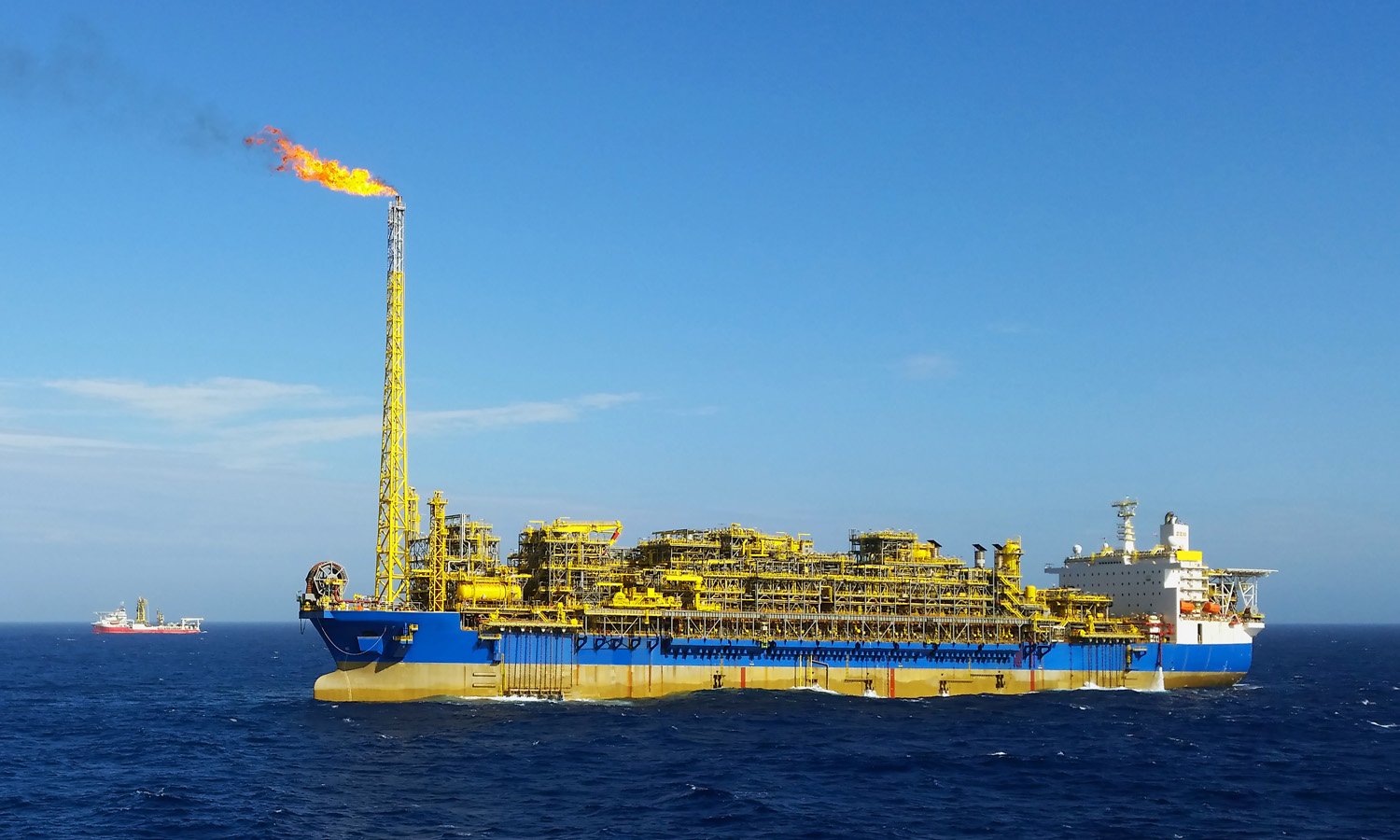
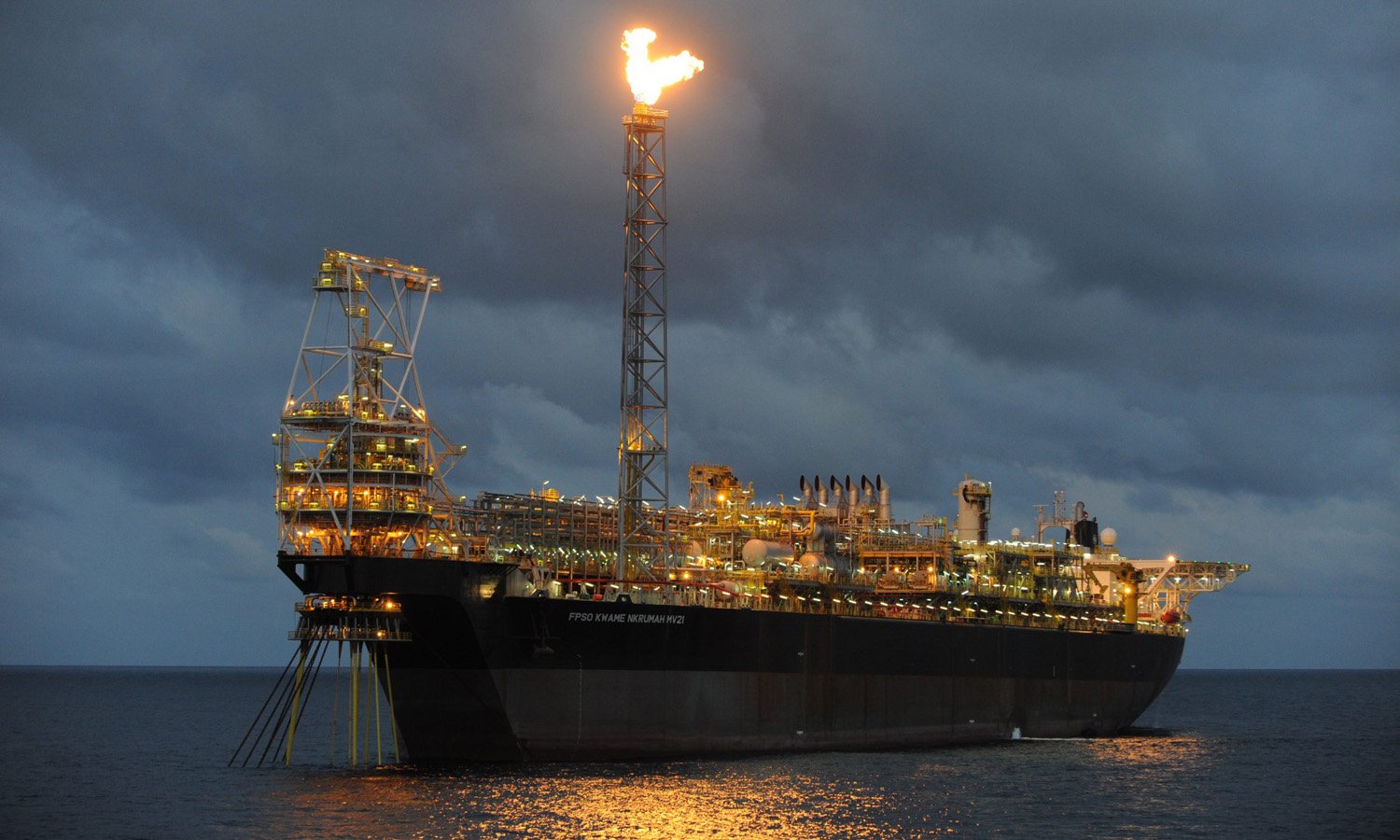
Floating Production Storage and Offloading Units (FPSO) are considered the most flexible of all FPS types and certainly the most prevalent. FPSOs produce and store hydrocarbons offshore in varying water depths. These units receive the complete wellstream, separate the oil, water and gas, store the oil and offload the stabilized crude oil to export tankers.
As of February 2026, 182 FPSOs were in operation, with 17 available and 23 on order.
The first FPSO, Shell’s Castellon was installed in 384 ft (117 m) of water. Over the years installed water depths have increased. The current water depth record for FPSO installation is held by SBM’s Turritella FPSO which currently services Shell’s Stones development in the U.S. Gulf of Mexico in 9,500 ft (2,900 m) of water.
As water depths have increased for FPSO installation so too have production and storage capacities. Newer FPSOs have processing capability exceeding 250,000 boe/d, up from 30,000 boe/d. Current maximum storage capacity is at 2.3 million barrels, a considerable increase from 11,000 barrels early on.
Capital costs for a FPSO range from $200 million to $4 billion+.
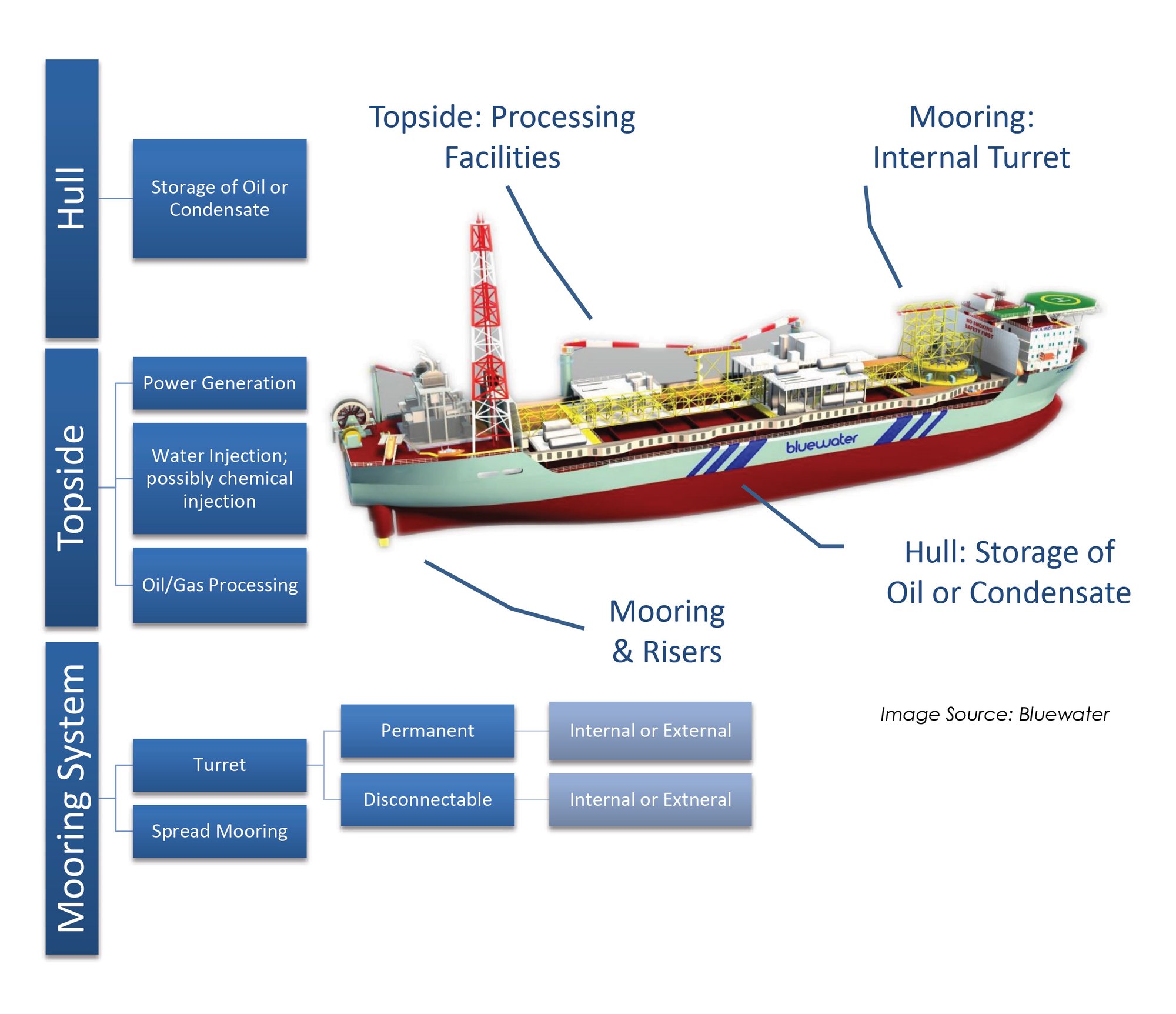
FPSOs have three key components, the hull, topside and mooring system. FPSO designs vary by vessel and are tailored to a field’s characteristics. As an example, the Turritella FPSO features a large disconnectable buoy allowing the FPSO to escape inclement weather, specifically hurricanes.
Section 3: Production Semis
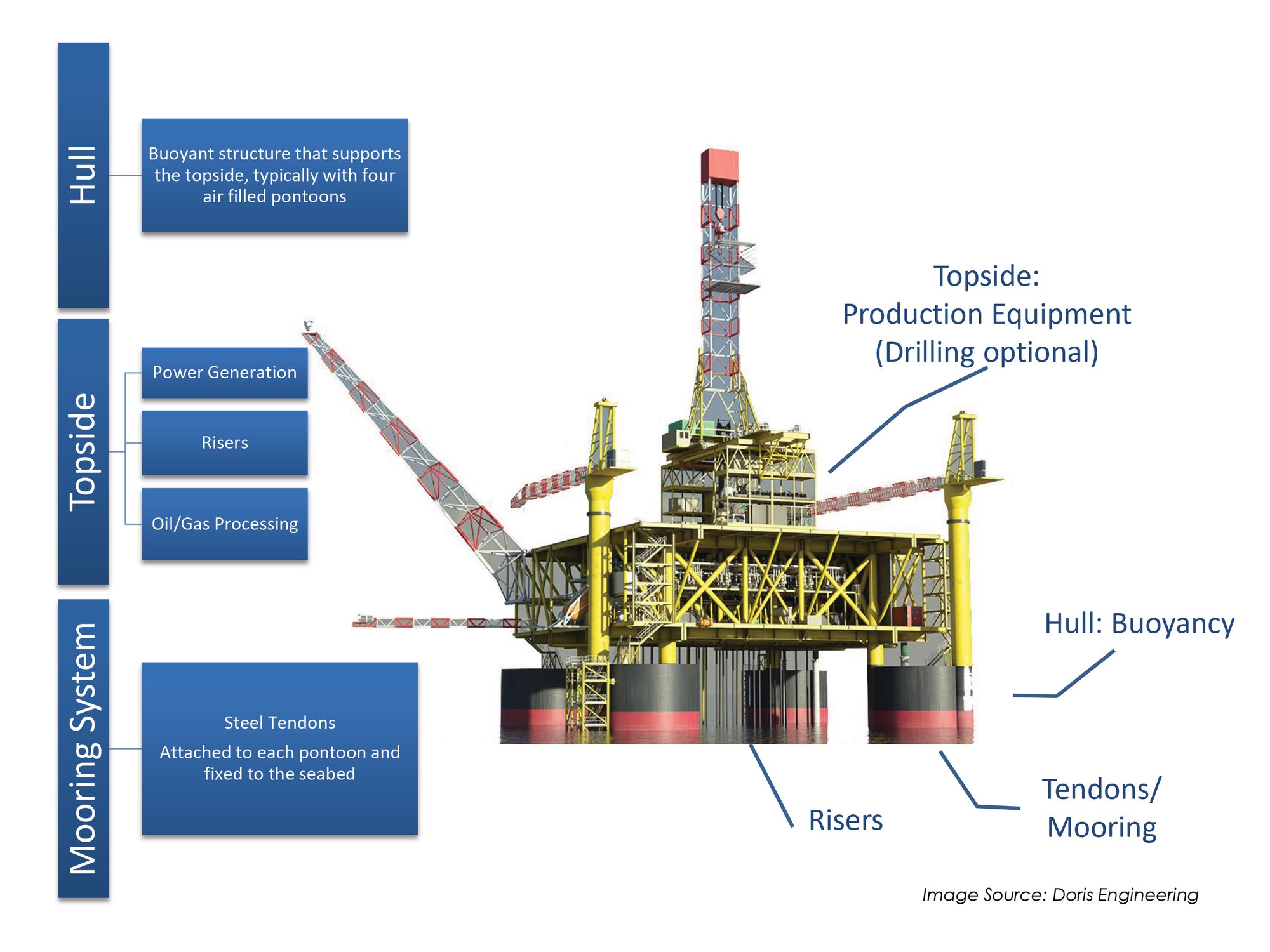
Production Semis were initially converted from existing drilling rigs, with the first conversion taking place in 1975 for use on the Hamilton Brothers Argyll and Duncan fields in the North Sea. As of February 2026, 38 Production Semis are in operation with 2 available and 5 units are on order. The units are well suited for use on complex deepwater fields involving a large number of wells over a dispersed area.
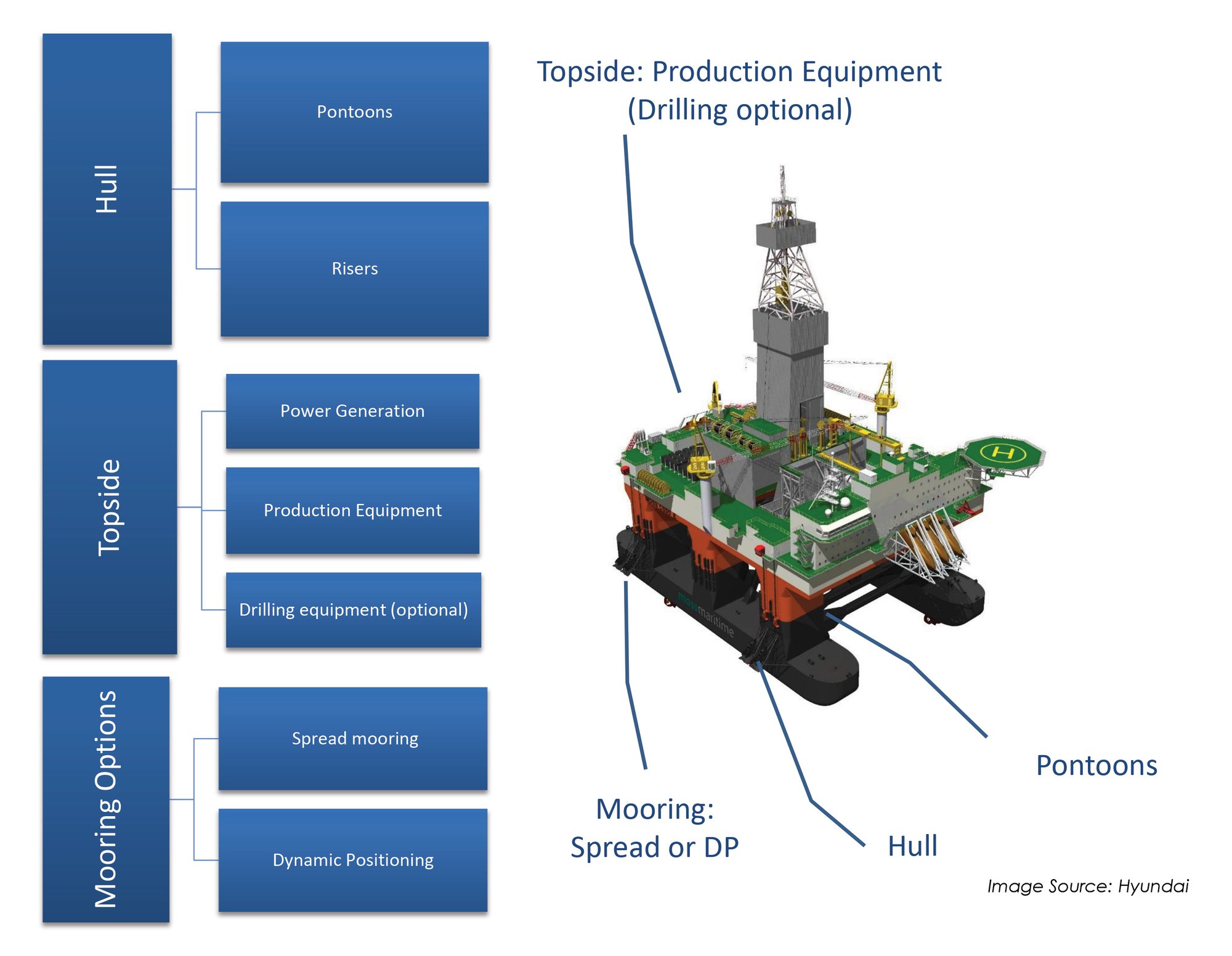
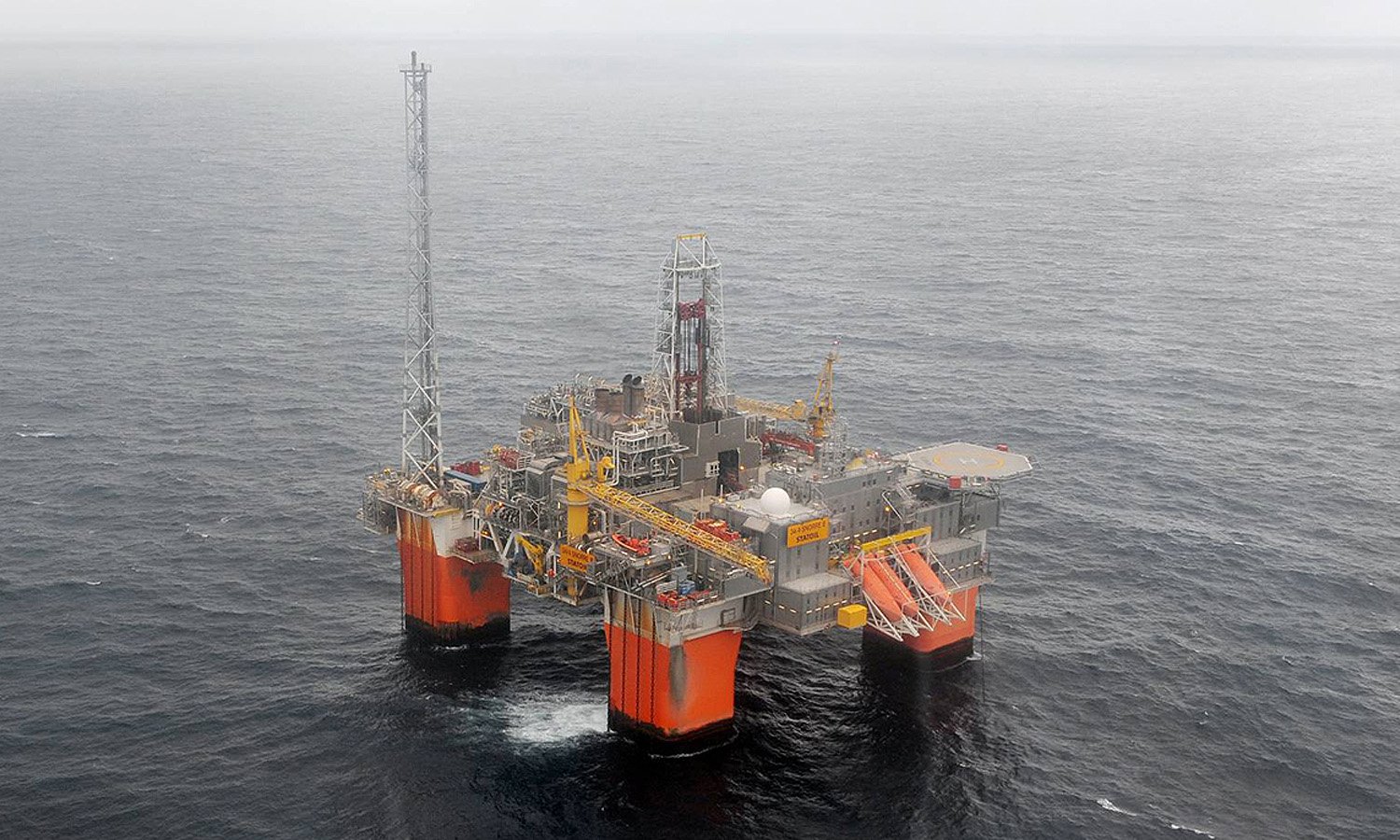
Production Semisubmersibles are non-ship shaped units capable of production and drilling. Typically Production Semis have two horizontal hulls connected to four cylindrical or rectangular column pontoons that rise above the water to support the topside. The pontoons are partially filled with seawater to stabilize the platform. Production semis are extremely stable and have wide deck spaces topside to support processing.
However, Production Semis do not have onboard production storage capability and must be connected to a pipeline or a Floating Storage and Offloading (FSO) unit. Additionally, as Production Semis are installed in deeper waters, the increased mooring line weight decreases the unit’s deckload storage capacity.
Section 4: Tension Leg Platforms
Tension Leg Platforms (TLPs) are the third most popular Floating Production System and as of February 2026, 26 currently are in operation. About two-thirds of these units are installed in the Gulf of Mexico, with others located off Africa, Brazil, in the North Sea and offshore Southeast Asia.
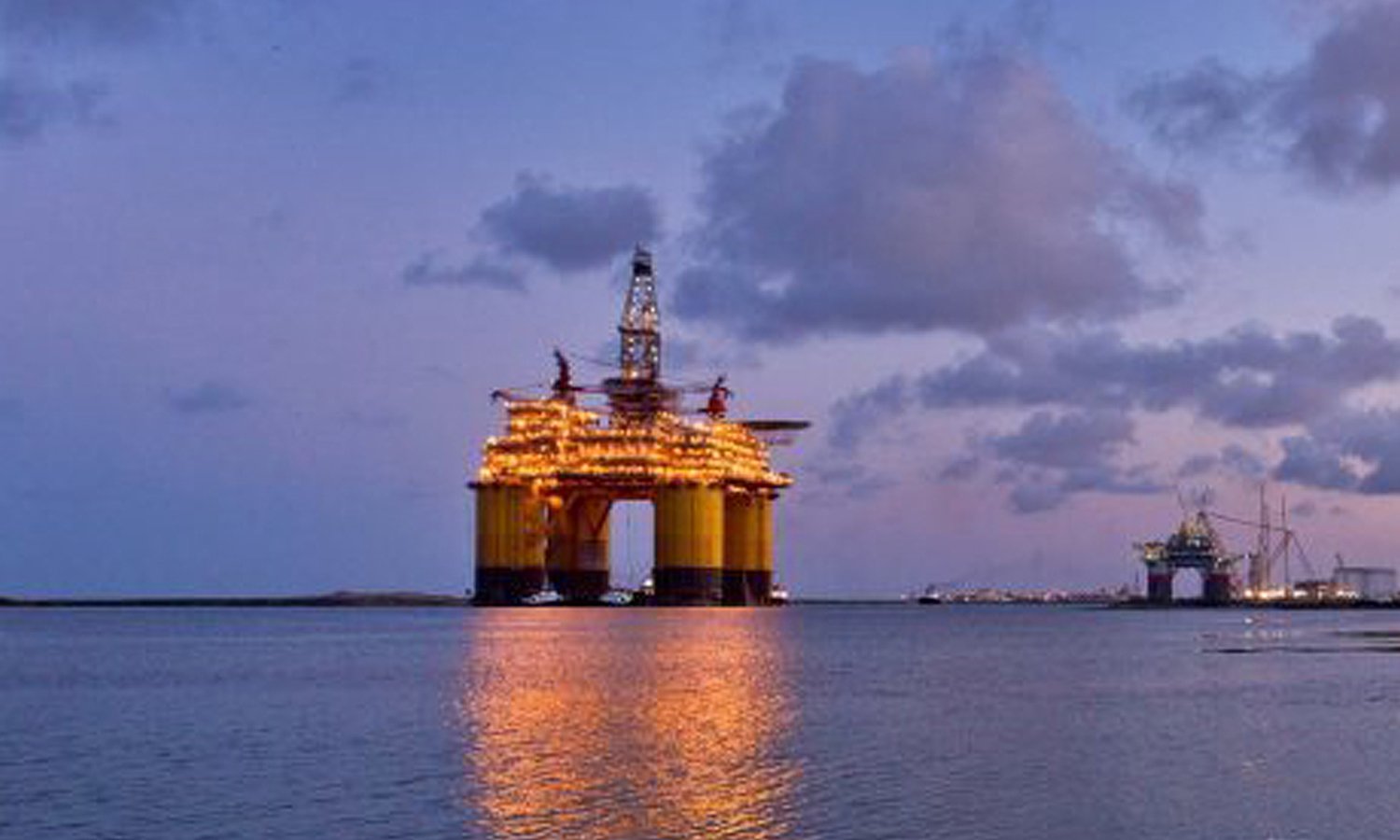
Key components of a TLP include the hull, topside and moorings. TLPs are production systems that are attached to the seabed by tendons, typically numbering between 6 and 16. The tendons allow the buoyant hull to have limited vertical movement while allowing for horizontal movement. Due to tendon tension TLPs have very limited surface motion that provides a stable platform for drilling and dry trees. Dry trees are a major advantage on fields with high hydrate/high wax crude where well maintenance must be considered. However, one drawback to using a TLP is that as tendon weight increases (deep water installations) payload capacity decreases.
The first TLP, Hutton, was installed in 1984 for Conoco for operation in the North Sea. Worldwide water depths for installed units are between 656 ft and 5,200 ft (200 m and 1,585 m).
TLPs can be used for production or as wellhead platforms. Wellhead TLPs have no processing capabilities and are attached to an accompanying production facility. Production TLPs currently have processing capability from 25,000 b/d to 360,000 b/d.
TLP costs range from $500 million to over $1 billion depending on water depth, location and topside facilities.
Section 5: Spars
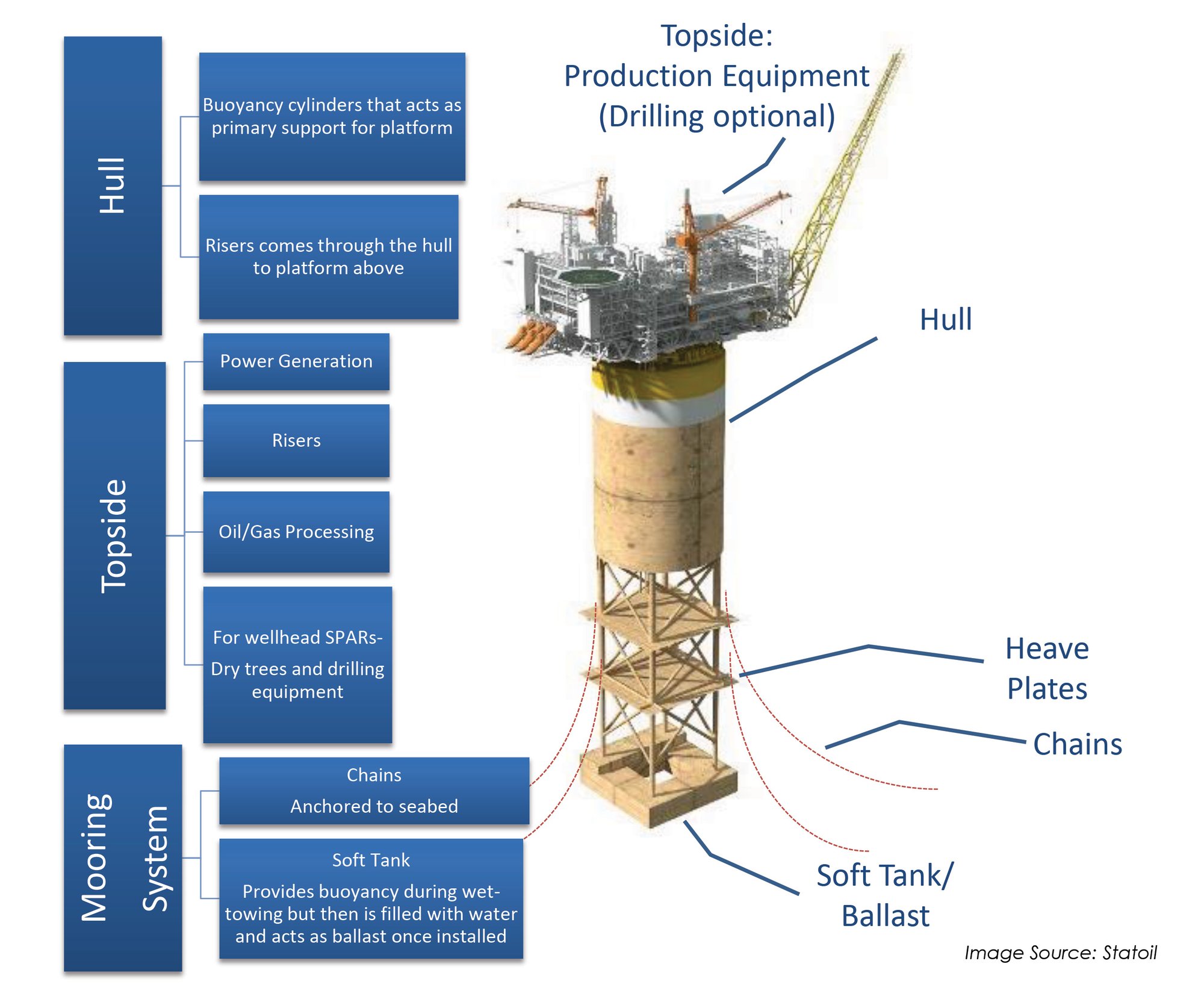
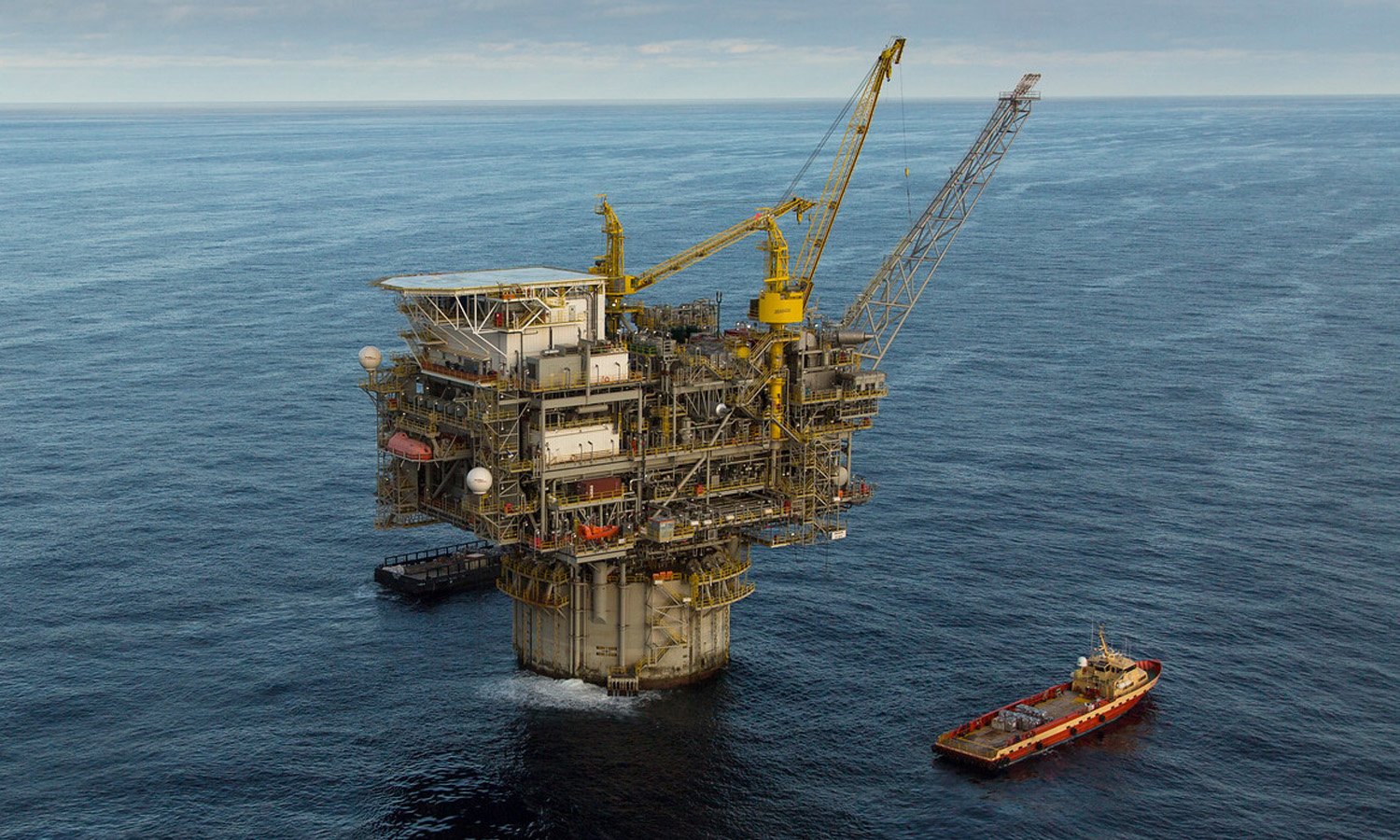
Spars are similar to TLPs in that both are platform structures that float vertically in the water, allowing production or drilling facilities to be installed. As with other floating production systems, components of a Spar include the hull, topside and mooring system.
Spars are most commonly used in the US Gulf of Mexico, due to their suitability for ultra-deepwater installation and access to the GOM pipeline network.
As of February 2026, 19 spars currently are in operation with 1 available. Neptune, the first production Spar, was delivered in 1996 at a cost of $300 million and installed in 1,936 ft (590 m) of water. The most recent Spar, Aasta Hansteen, cost $2.6 billion, was installed by Equinor in 4,265 ft (1,300 m) of water in the Norwegian Sea. Perdido was installed by Shell in 8,005 ft (2,440 m) of water and currently is the deepest Spar installation.
Initially, Spars were designed with a full length cylinder exceeding 656 ft (200 m), three of these classic designs were built and installed: Neptune, Genesis, and Diana.
Newer spars, called truss spars, no longer have a full length cylinder, but rather an upper hard tank and a lower truss structure.
Spars are extremely stable, making them suitable for drilling as well as production. Though no current installed units offer storage, Aasta Hansteen (topsides currently under construction) will have onboard storage capacity of 160,000 bbls.
Additional Spar strengths include minimum vertical movement, drilling capability, dry tree accommodation, and relative insensitivity to ultra-deepwater installation. However, Spars are expensive and require a horizontal tow for installation at destination. In addition, a heavy lift vessel or floatover crane vessel for hull/topside mating is necessary. Other drawbacks include minimal to zero storage and the Spar’s stacked deck design limits future flexibility.
Did you know EMA offers accurate and dependable market intelligence for the Floating Production Sector?
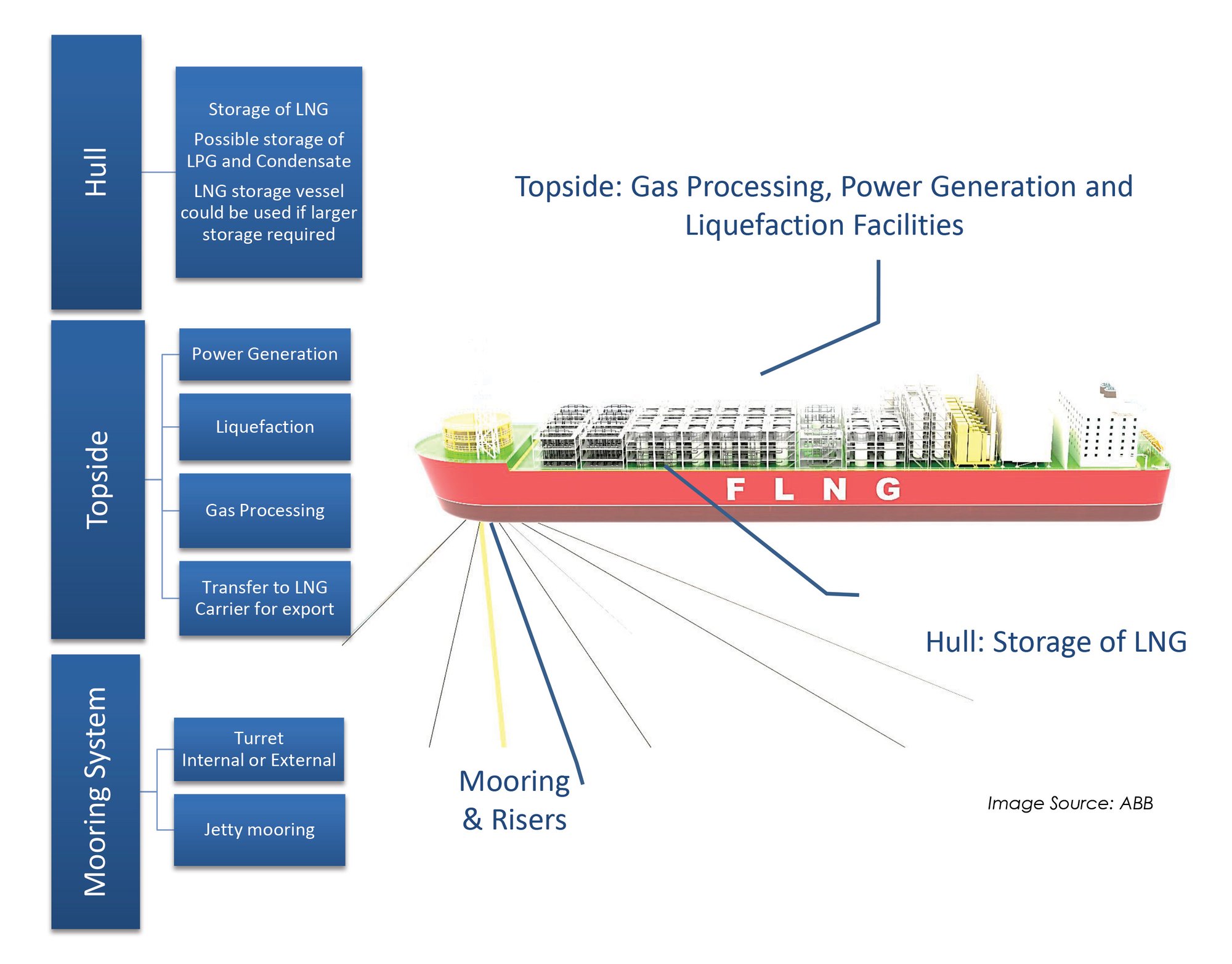
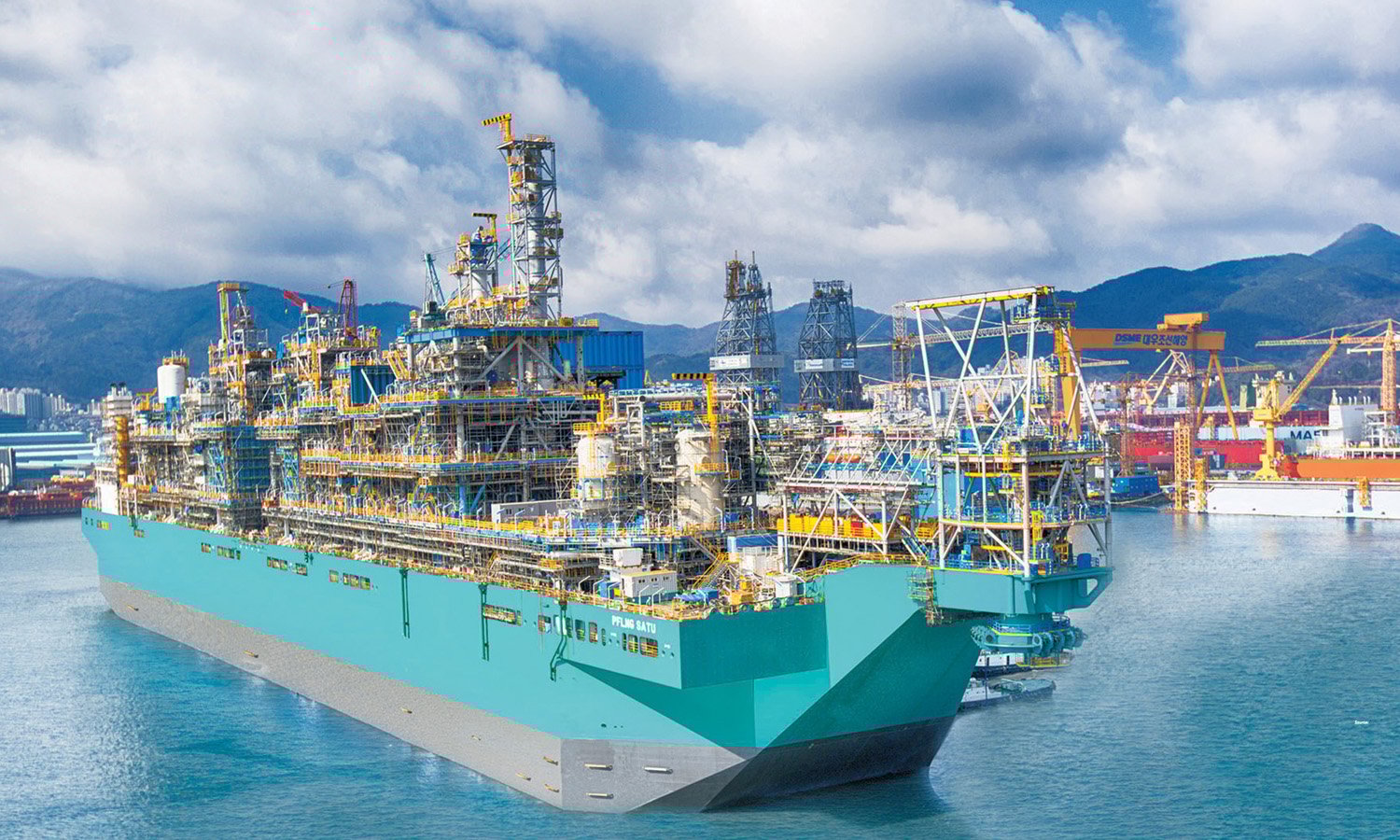
Floating Liquefied Natural Gas Units (FLNGs) are the newest type of floating production system. As of February 2026, 8 units currently are in operation with 11 on order. FLNGs are floating gas-liquefaction plants mounted on ship-shape or barge hulls with internal storage. The units are designed to be positioned on or near a subsea natural-gas resource or moored in a location where gas can be received from an onshore source.
The FLNG hull is used to store LNG and other liquids. Topsides may be configured for liquefaction-only or configured for both liquefaction and processing. Field characteristics and location predominately determine which topside configuration is installed on the unit. Current FLNG designs are either turret, tower yoke, or jetty moored systems.
FLNGs can be grouped into four sub-types: Mega, Mid-size, Export Liquefaction Terminal, and Liquefaction Barge. Installed in Australia’s Browse Basin, Shell’s Mega Prelude FLNG has processing capacity of 3.5 mtpa of gas, 35,000 b/d of LPG/condensate and storage capacity of 220,000 m3 LNG and 1.3 million bbls of LPG/condensate.
Current water depths for FLNGs range between 262 ft and 7,418 ft (80 m and 2,261 m).
The units are complex and costly, especially with the addition of processing capability. Storage capacity, mooring and design impact cost. Current liquefaction only units range in cost from $300 million to $2.3 billion and processing and liquefaction units can cost up to $7 billion.
FLNG strengths include avoiding the need for pipelines and onshore facilities. The units may be built as serial units in a shipyard and have the potential for redeployment/repurposing following field depletion. Drawbacks include incorporation of technology not yet proven in offshore service and the associated unknowns. In addition, the separation process in LNG production is sensitive to vessel motion. Without onshore facilities, potential opposition from local government may exist too, as no onshore jobs would be created.
Section 7: Floating Storage & Regasification Units
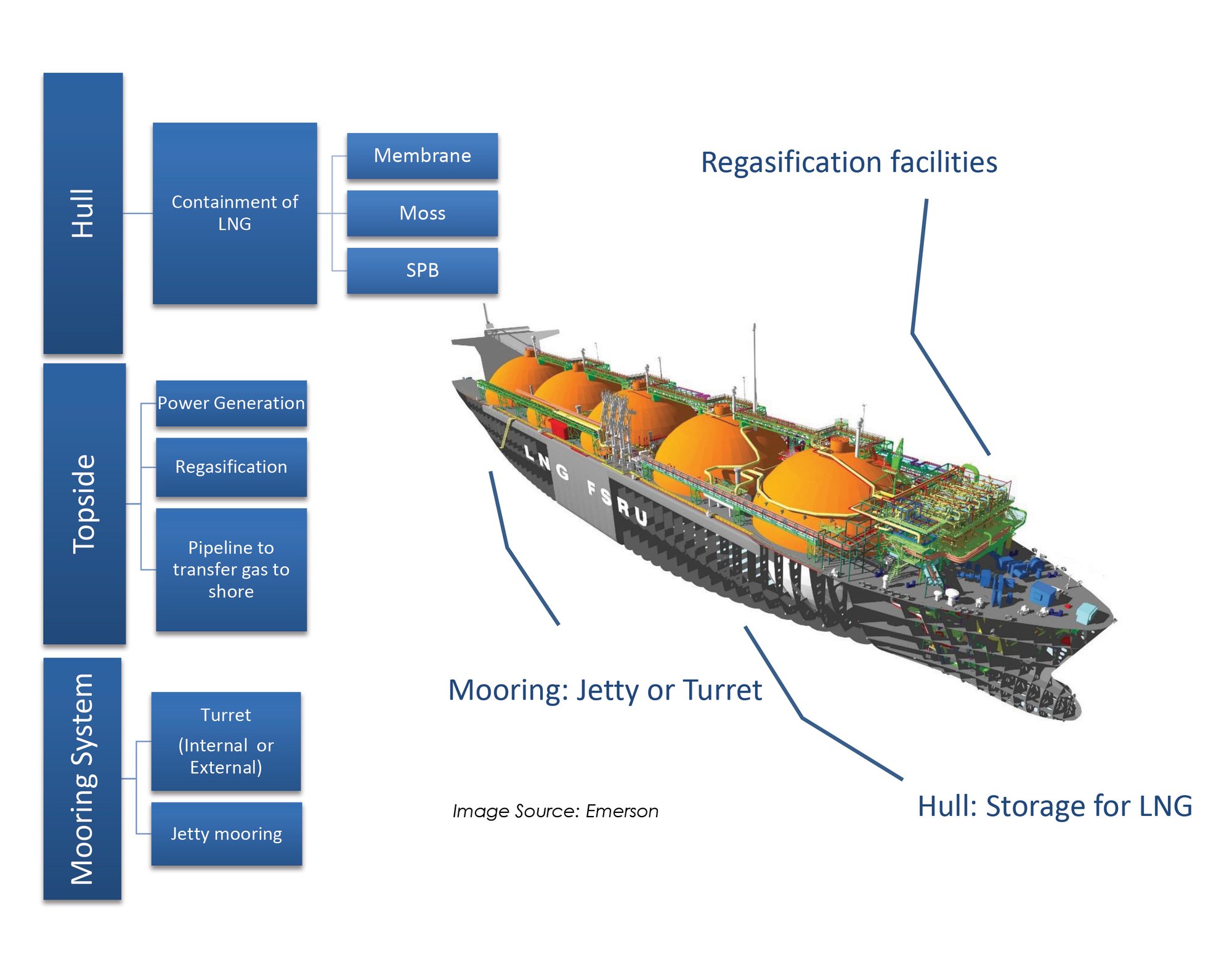
Floating Storage and Regasification Units (FSRUs) enable natural-gas delivery to consumers in locations physically or commercially inaccessible by pipeline. FSRUs function similarly to land-based LNG regasification plants. They receive, store and regasify LNG that is transported in LNG carriers. Delivered LNG is stored in the FSRU until required – then transformed to gas via a heat transfer plant mounted on the hull.
As of February 2026, 52 units are in operations with 1 available, and 7 units are on order.
FSRUs can be purpose built as a regasification facility or a LNG carrier may be converted for use as a regasification unit. Some FSRUs are former LNG Regasification Vessels (LNG Regas). LNG Regas units predate FSRUs and function as LNG carriers with gasification capabilities. Some of these units have been converted to FSRU service.
Topsides primarily contain power generation and regasification equipment. LNG is stored in the vessel hull and FSRUs may be moored offshore or positioned alongside a jetty. Current FSRUs have been moored in water depths between 66 ft and 367 ft (20 m and 112 m).
FSRUs have processing capability of between 240 mmscf/d and 1,000 mmscf/d of gas with LNG storage between 126,000 cubic meters and 263,000 cubic meters. Newbuild cost ranges from $200 – $425 million. Converted units are typically cheaper.
FSRUs can limit environmental opposition that would apply to a land-based LNG regas plant. Units may be used as a peak seasonal receiving/regas facility & as a LNG carrier in off-peak season. With mobility, the units may also be relocated on completion of a contract.
The FSRU’s primary drawback is generally having less storage and regasification capacity compared to land-based terminals.
Section 8: Floating Storage & Offloading Vessels
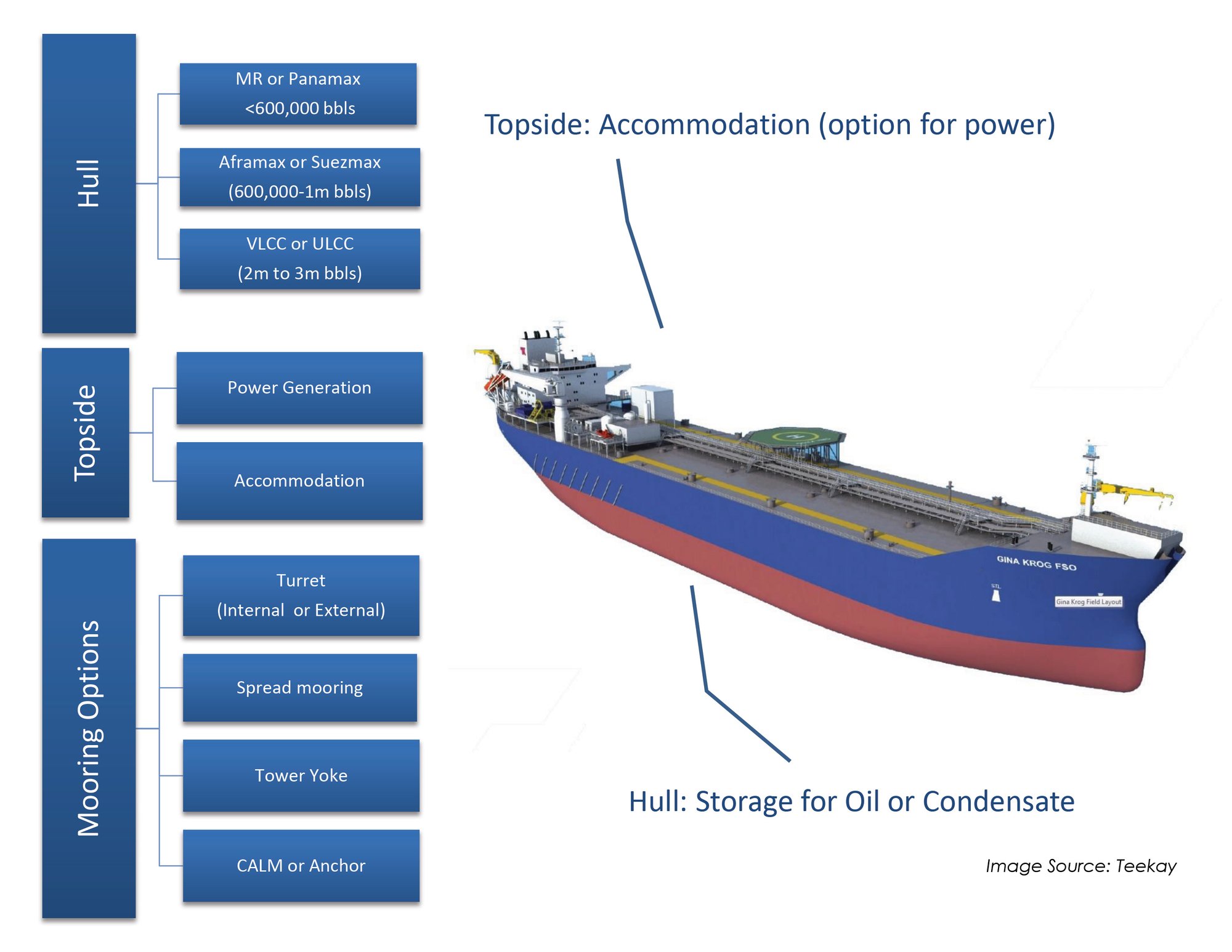
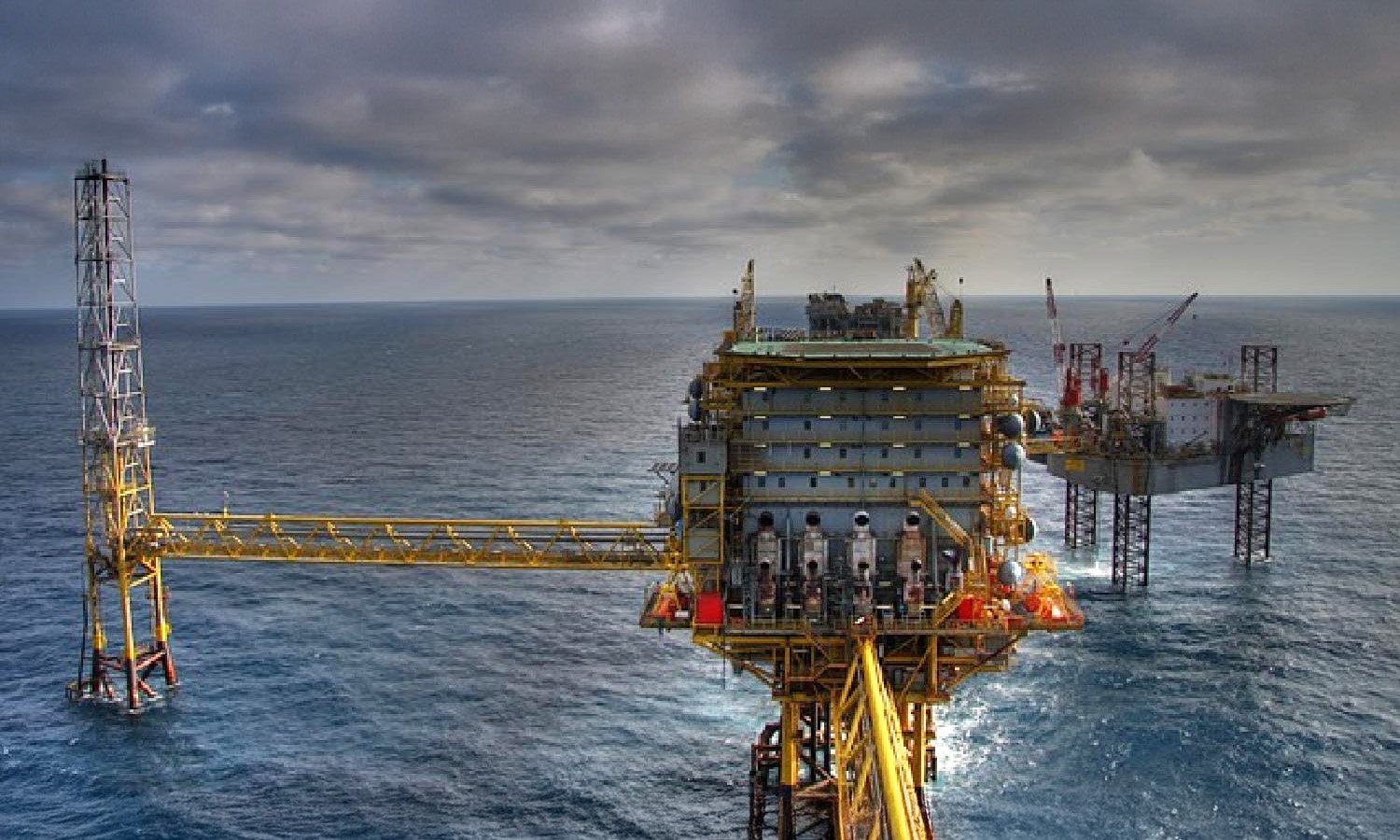
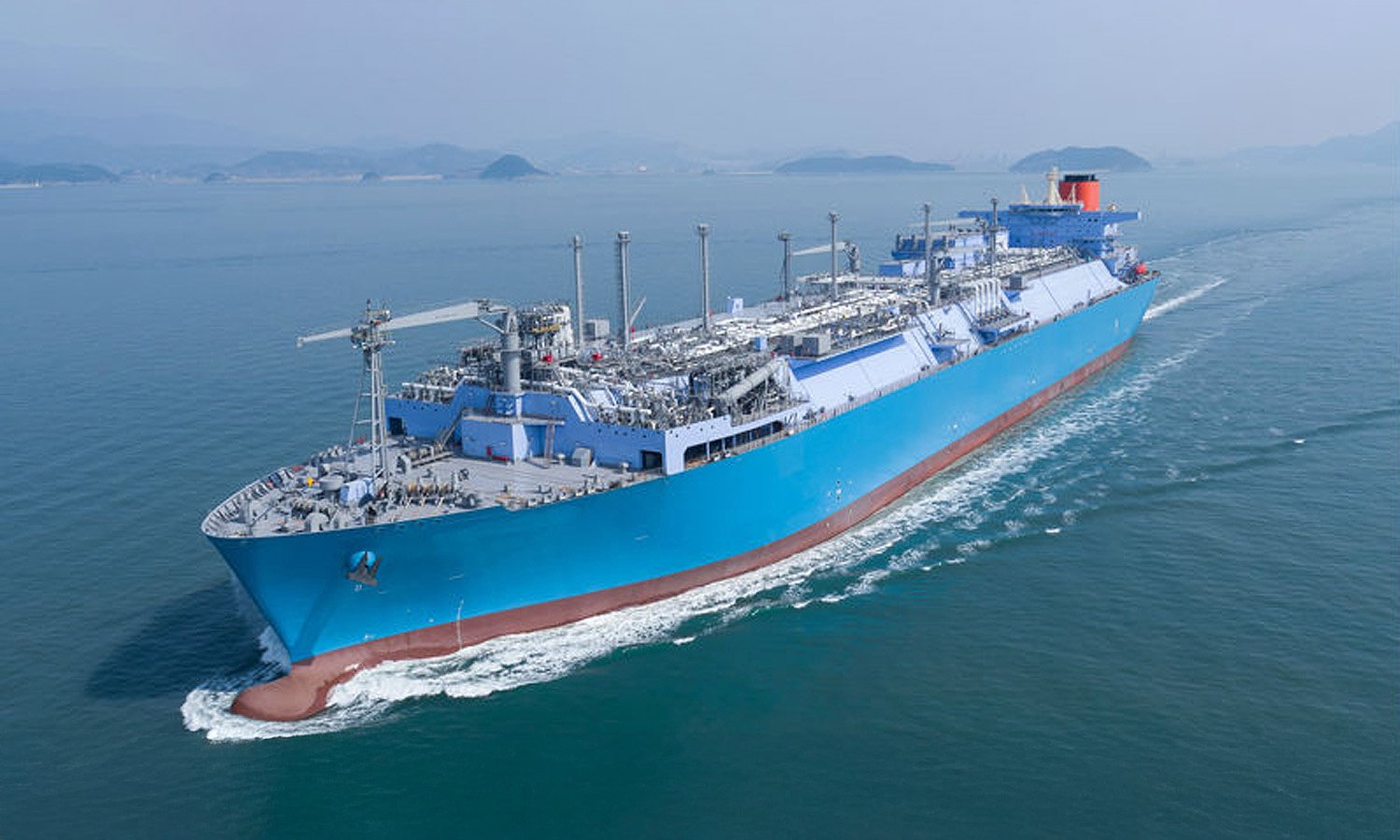
Floating Storage and Offloading vessels (FSOs) are primarily used in conjunction with fixed platforms, mobile offshore production units, and production floaters (Semis, TLPs and Spars) to provide offshore field storage of oil and gas condensate.
As of February 2026, 109 FSO units (91 oil and 18 LNG) are in operation, with 5 (oil) available, and 11 units (5 oil and 6 LNG) are on order.
In some cases, FSOs are used as offshore storage/export facilities for onshore production fields and as storage/blending/transshipment terminals for crude oil or refined products.
Most FSOs store oil, although a few store LPG or LNG. Oil storage capacity on FSOs range from 60,000 barrels to 3 million barrels. LPG FSOs store between 54,000 m3 and 83,000 m3 of liquefied petroleum gas. LNG FSOs store around 130,000 m3 of liquefied natural gas.
Most FSOs in operation are single-hull tankers modified for storage/offloading use.
The majority of FSOs operate in Southeast Asia.
FSOs have many mooring options based on location and have been installed in water depths between 49 ft and 3,871 ft (15 m and 1,180 m).
Converted FSOs cost between $30 million and $200 million while newbuild FSOs cost between $100 million and $300 million.
Strengths include large storage capacity and multiple mooring options. Conversions to FSO are considered relatively simple and when storage is no longer required, the units may be relocated or converted to FPSOs. One of the only drawbacks is FSOs do not have processing capacity.
Section 9: Mobile Offshore Production Units
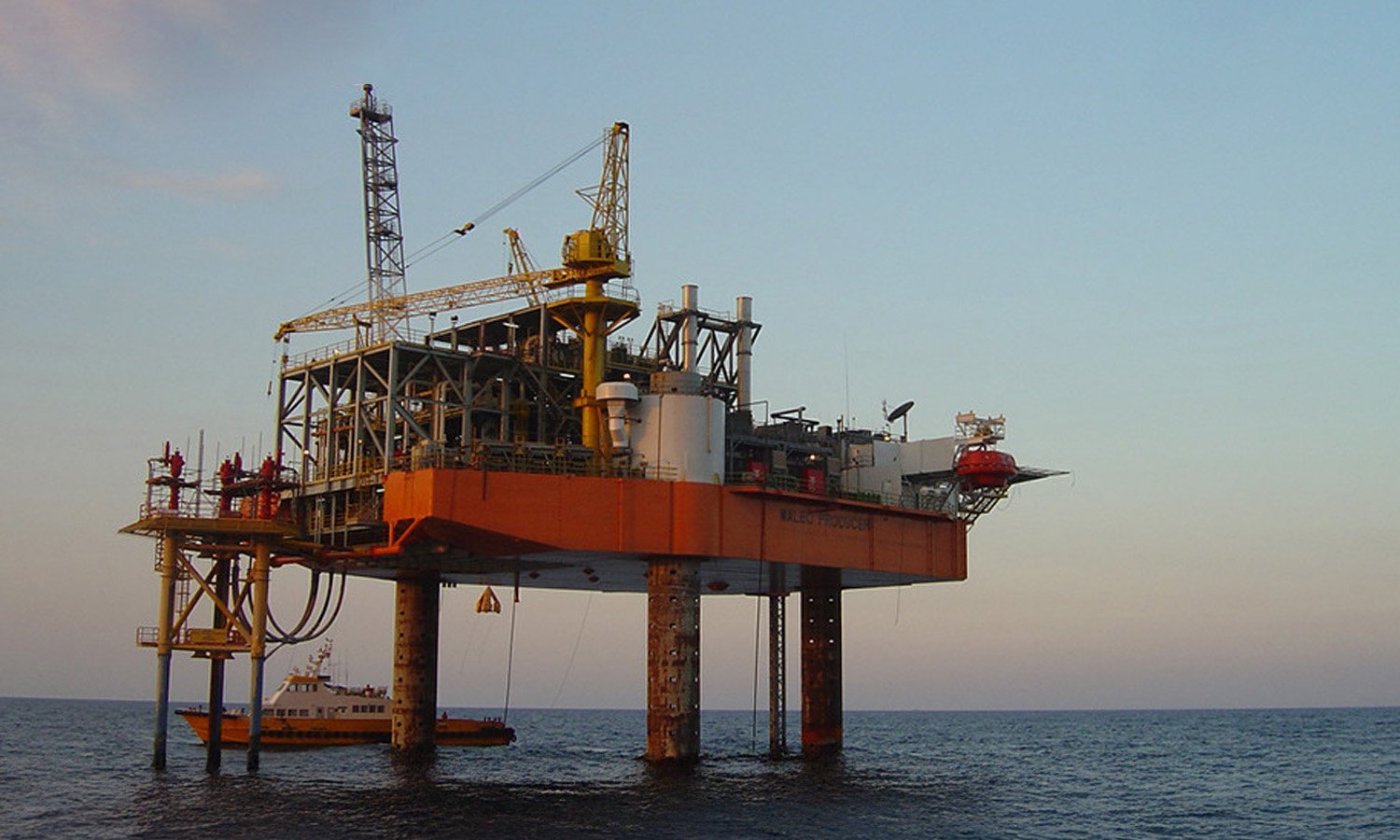
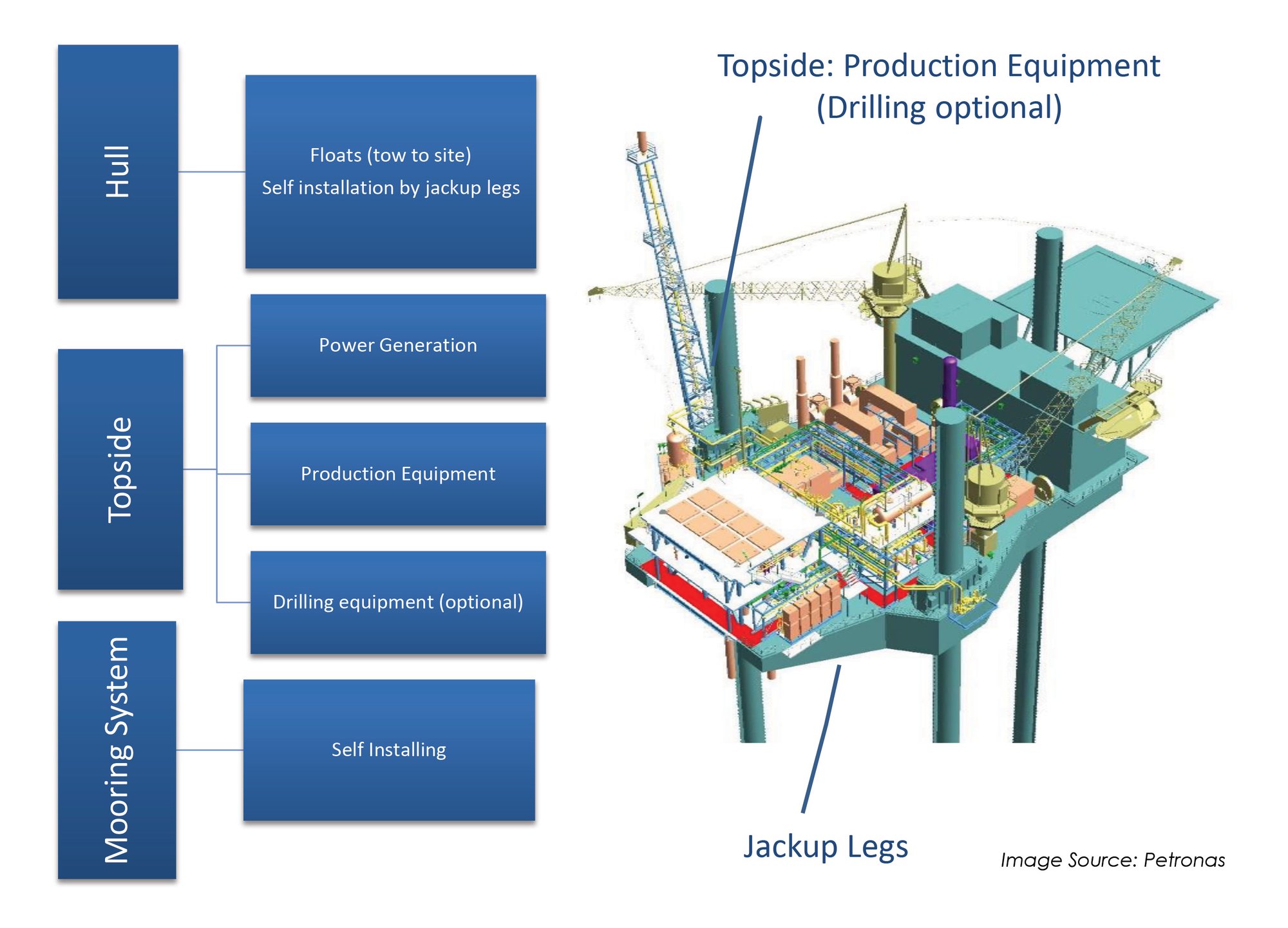
Mobile Offshore Production Units (MOPUs) are essentially jack-up rigs with production facilities. MOPUs are installed in shallow waters (less than 100 m) and are connected to a Floating Storage and Offloading vessel (FSO) or pipeline. MOPUs can be used for drilling and/or production. As of February 2026, 23 units are in operation, with 1 available, and 2 units are on order.
The first MOPU was installed in the Ekofisk Field in the Norwegian North Sea in 1971. The units are mainly used in the Mediterranean, South Asia and Southeast Asia, although a few MOPUs have been designed for harsh environments like the North Sea and Canada.
MOPUs may be converted from existing jack-ups or purpose built. Converted units cost from $50 million to $180 million while new buildings for harsh environments may cost up to $500 million.
MOPU topsides are usually a single layer due to deckload weight limitations and primarily contain connection to risers, processing and/or drilling equipment and accommodation. MOPUs have no storage and no external mooring systems.
MOPUs are a cost effective solution for production of marginal fields. Jack-up to MOPU conversion costs are typically lower than other options and the units may be redeployed and re-leased. Drawbacks to MOPU selection/usage include limited water depth and production capacity. Lack of onboard storage requires the addition of either a FSO or pipeline to the production solution, further limiting flexibility.
Section 10: Final Selection
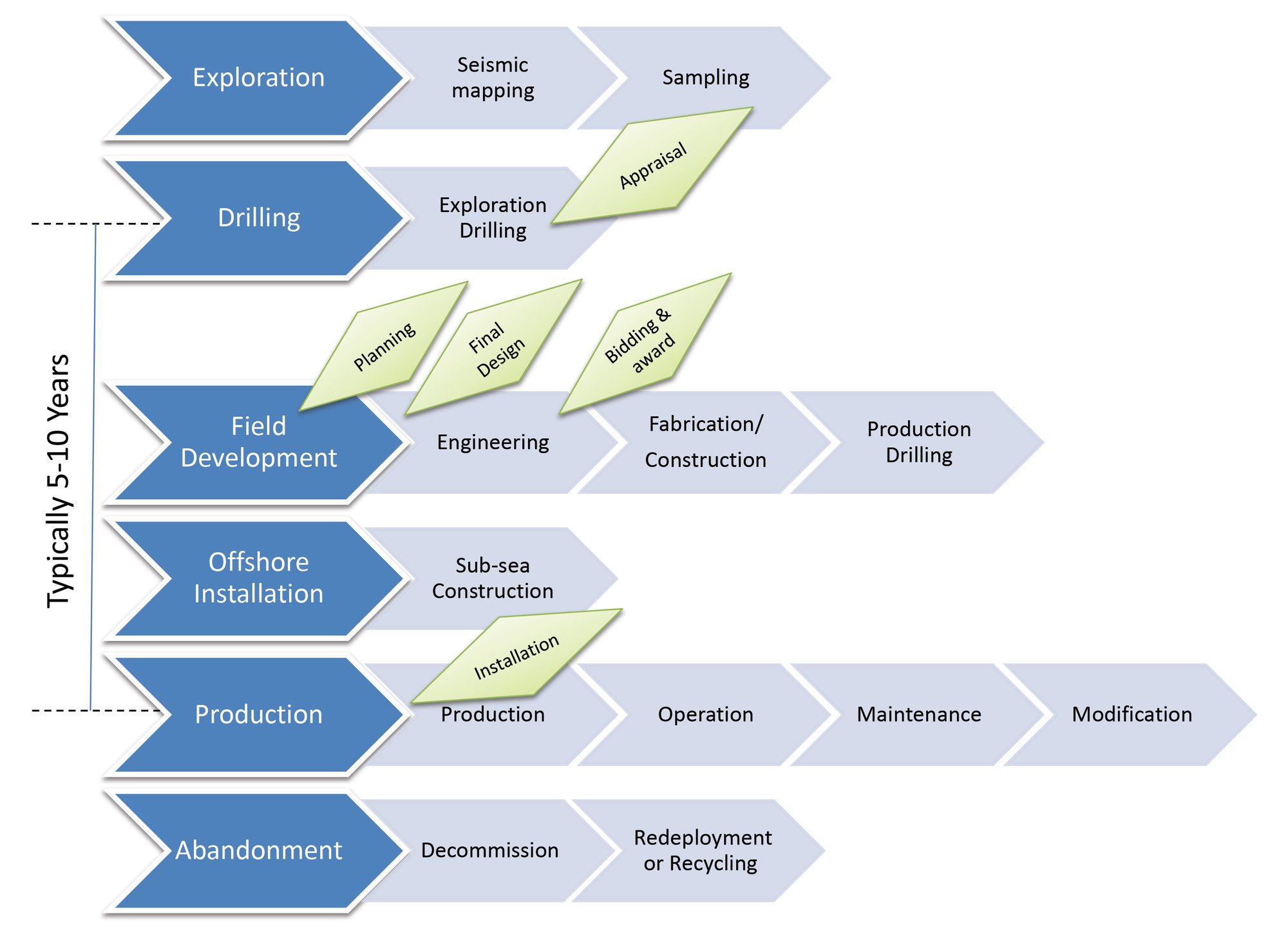
Prior to selection of a FPS, the field operator and its partners evaluate various options for economic development of the field. Based on field characteristics, oil price, water depth, weather, location, and other variables mentioned above commercial and strategic decisions are prepared. Then, technical assessments and commercial estimates are made and reviewed in an iterative process until an optimum field development solution is selected. Once the FPS design is chosen, the specifications are developed and bidding documents are prepared. Following pre-qualification of all potential bidders, the operator submits a tender with requests for bids to the pre-qualified bidders.
This phase of FPS selection and bid tendering process often takes as long, or longer, than the actual FPS construction. Contract award is often based on lowest price, assuming the bidder’s proposal fulfills all the technical, commercial, and contractual requirements.
Eight FPS designs types have been conceptualized and built in 50 years and these offerings provide operators with field -specific solutions to efficiently and effectively produce their discoveries. FPSOs remain the uncontested crowd favorite, the newer designed FLNG units have potential to eliminate onshore infrastructure and FSRUs expand hydrocarbon production to remote markets.
Likely additional FPS designs will be conceptualized and built during the next 50 years as field characteristics and drilling techniques and technologies continue to evolve. For now though, operators must methodically choose between a FPSO, Production Semi, TLP, Spar, FLNG, FSRU, FSO and MOPU.
A Floating Production System (FPS) is an offshore facility used to produce hydrocarbons in water depths and locations where fixed platforms are not viable. FPSs receive wellstream from wells or subsea infrastructure, process oil, gas, and water to required specifications, and export hydrocarbons by pipeline, tanker, or LNG carrier. Designs vary by field characteristics, water depth, and environmental conditions.
Eight FPS design types are in operation today: FPSO, Production Semi, TLP, Spar, FLNG, FSRU, FSO, and MOPU. Each type is suited to different field requirements and operating environments, including water depth, export method, metocean conditions (ocean current and weather), drilling needs, and whether onboard storage is required.
A FPSO is a production facility that processes hydrocarbons offshore, stores oil onboard, and offloads stabilized crude to export tankers. A FSO is a storage and offloading vessel that typically does not have processing capability. FSOs are often used alongside fixed platforms or separate production facilities to provide offshore storage and export support.
FPSOs are considered the most flexible FPS type because they combine processing, storage, and tanker offloading in one unit and can operate across a wide range of water depths. They are commonly used where pipeline export is not available or not economic, and where operators value a development solution that can be tailored to field characteristics and potentially repurposed through upgrades or modification.
Production Semis are well suited for complex deepwater fields with a large number of wells spread over a dispersed area. They are extremely stable and offer wide deck space topside for processing and drilling capability. Unlike FPSOs, Production Semis do not have onboard storage, so export requires a pipeline connection or a dedicated storage solution such as a FSO.
TLPs are used where operators want a highly stable facility with limited vertical movement, which supports drilling and dry trees. Dry trees can be a major advantage on fields with high hydrate or high wax crude where well maintenance is a consideration. TLPs can be configured for production or as wellhead platforms, depending on processing requirements.
Both Spars and TLPs are floating platform structures that support drilling and production facilities, but their motion characteristics and structural approaches differ. TLPs rely on tendons held in tension to limit vertical movement. Spars are deep-draft structures designed for stability, often used in ultra-deepwater developments, with mooring systems tailored to field location and installation constraints.
Floating Liquefied Natural Gas (FLNG) is an offshore gas-liquefaction facility mounted on a ship-shape or barge hull with internal storage. FLNG can be positioned on or near a subsea gas resource or used where gas is received from an onshore source. It may be selected to reduce the need for pipelines and onshore liquefaction facilities, depending on field location and project requirements.
A Floating Storage and Regasification Unit (FSRU) receives LNG from LNG carriers, stores it onboard, and regasifies it for delivery to consumers, typically via pipeline. FSRUs function similarly to land-based regasification terminals but can be deployed where pipeline access is limited or where seasonal or contracted supply flexibility is important.
No. Production Semis do not have onboard production storage capability. They must be connected to a pipeline or paired with a Floating Storage and Offloading (FSO) unit for storage and export. This export requirement is a key decision factor when Production Semis are considered for deepwater developments.
A dry tree is a well completion where the wellhead and Christmas tree are located on the floating facility rather than on the seabed. Dry trees can improve access for well intervention and maintenance. This can be especially relevant on fields with flow assurance challenges such as hydrates or wax, where ongoing well serviceability can influence facility selection.
FPS selection is shaped by field geology and environmental conditions, hydrocarbon specification, reservoir requirements (water, gas, chemical injection), well and subsea configuration, water depth, ocean current and weather, and proximity to existing infrastructure. Commercial considerations also matter, including oil price, expected field life, budget, export route, and the potential for tiebacks and future modifications.
The bid tendering and selection process can take as long, or longer, than FPS construction. Operators typically prepare technical assessments and commercial estimates in an iterative process, then issue tender documents to pre-qualified bidders. Contract award is often based on lowest price, assuming technical, commercial, and contractual requirements are met.
In some cases, yes. Certain FPS designs and vessel-based solutions may be repurposed through upgrade and modification, depending on hull condition, topside design, and project requirements. FSOs may be relocated or converted to FPSOs in some scenarios. Redeployment potential varies widely by unit type, field-specific design choices, and the scope of required modifications.
Author: Yun Xu, Lead Analyst at Energy Maritime Associates
Last updated: March 2026 (updated annually)
Data note: Data compiled from EMA’s in-house database and market research. Platform note: More details are available on the Flowline® SaaS platform.

.jpg?width=1500&height=900&name=FSO_Teekay_Teekay%20Randgris%20Floating%20storage%20unit%20for%20Statoil%20(Equinor).jpg)